

Fluid Bed Dryer: Complete Guide to Fluidized Bed Dryer Technology
Introduction to Fluid Bed Dryer
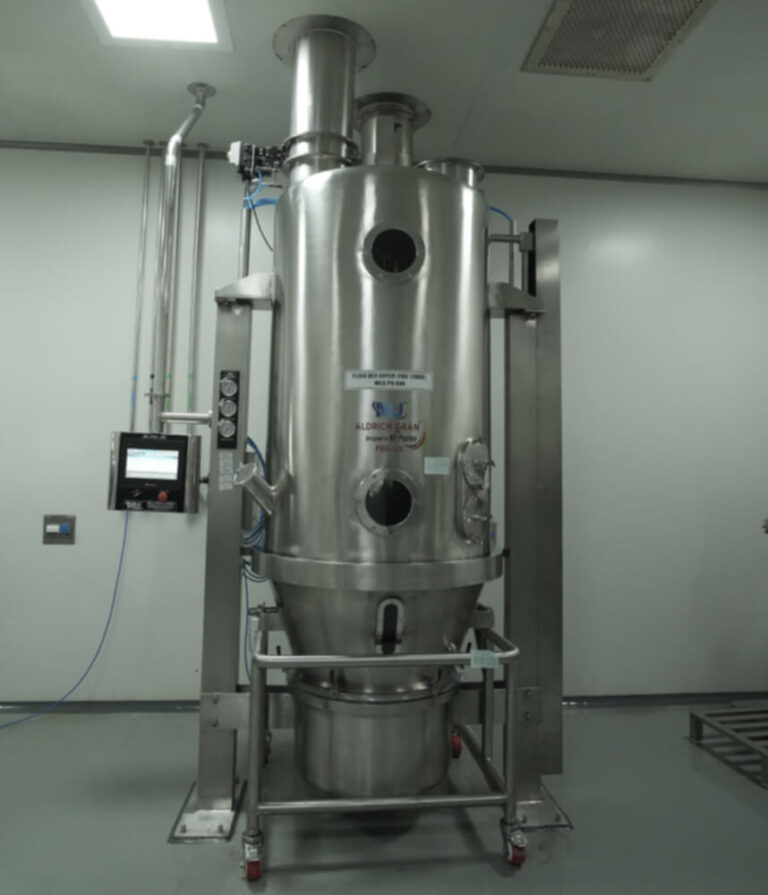
A Fluid Bed Dryer (FBD) is one of the most efficient industrial drying systems used across pharmaceutical, chemical, food processing, nutraceutical, agricultural, and powder-processing industries. Known for its rapid drying capability and uniform heat distribution, the Fluid Bed Dryer has become a preferred solution for drying granules, powders, crystals, and particulate materials.
Share your requirements to our experts ? We are here for you
What is a Fluid Bed Dryer?
A Fluid Bed Dryer is a processing machine designed to dry wet powders, granules, and particles by passing hot air through a perforated bed. The upward airflow lifts and suspends the material, creating a fluidized condition where each particle comes into direct contact with heated air.
This fluidization process significantly improves heat transfer efficiency, resulting in faster drying times, lower energy consumption, and consistent product quality.
Compared to conventional tray dryers and static drying methods, Fluidized Bed Dryers provide superior drying performance while maintaining product integrity.
Working Principle of Fluid Bed Dryer
The working principle of a Fluid Bed Dryer is based on fluidization technology.
The process begins when wet material is loaded into the drying chamber. Heated and filtered air is introduced from the bottom through a perforated distributor plate. As air velocity increases, particles become suspended and behave like a boiling liquid.
This fluidized state creates:
- Uniform heat distribution
- Efficient moisture evaporation
- Improved airflow contact
- Faster drying rates
- Consistent product quality
The moisture-laden air is exhausted through filters, while the dried product remains inside the chamber until the desired moisture level is achieved.
Main Components of a Fluidized Bed Dryer
A standard Fluid Bed Dryer consists of several critical components:
Air Handling Unit
The air handling unit filters, heats, and controls airflow before entering the drying chamber.
Product Container
The product bowl or container holds the wet material during processing.
Air Distribution Plate
A perforated plate ensures even airflow distribution across the product bed.
Heating System
Electric heaters, steam heaters, thermal fluid heaters, or gas-fired systems provide the required drying temperature.
Filter Bags
Filter bags prevent product loss and allow clean air exhaust.
Exhaust System
Removes moisture-rich air from the drying chamber.
Control Panel
Advanced PLC or HMI systems monitor and control temperature, airflow, pressure, and drying cycles.
Types of Fluid Bed Dryers
Different industries require different Fluid Bed Dryer configurations.
Batch Fluid Bed Dryer
A batch Fluidized Bed Dryer processes a fixed quantity of material per cycle. It is widely used in pharmaceutical and specialty chemical industries.
Continuous Fluid Bed Dryer
Continuous Fluid Bed Dryers provide uninterrupted production and are suitable for large-scale industrial operations.
Vibratory Fluid Bed Dryer
This type combines fluidization with vibration to improve material movement and drying efficiency.
Static Fluid Bed Dryer
Static systems are ideal for delicate products requiring gentle handling.
Multi-Stage Fluid Bed Dryer
Designed for complex drying applications requiring multiple temperature zones.
The Fluid Bed Dryer is also commonly referred to as:
- Fluidized Bed Dryer
- FBD Dryer
- Fluid Bed Drying System
- Fluidized Bed Drying Machine
- Fluid Bed Processor
- Fluid Bed Drying Equipment
- Fluid Bed Drying Unit
- Industrial Fluid Bed Dryer
- Fluidized Air Dryer
- Fluid Bed Drying Plant
All these terms describe a drying system that uses heated air to suspend solid particles, creating a fluid-like state for efficient moisture removal.
Applications of Fluid Bed Dryers
Fluid Bed Dryers are widely used across numerous industries due to their versatility.
Pharmaceutical Industry
In pharmaceutical manufacturing, Fluid Bed Dryers are used for:
- Granule drying
- Tablet production
- Capsule manufacturing
- API processing
- Powder drying
The pharmaceutical sector heavily relies on FBD Dryers because of their compliance with GMP and FDA standards.
Food Processing Industry
Fluidized Bed Dryers are commonly used for:
- Spices
- Herbs
- Grains
- Cereals
- Coffee
- Tea
- Dairy powders
- Protein powders
Chemical Industry
Chemical manufacturers use Fluid Bed Drying Equipment for drying:
- Pigments
- Resins
- Fertilizers
- Polymers
- Specialty chemicals
Nutraceutical Industry
Fluid Bed Dryers help process vitamins, supplements, minerals, and health products.
Agriculture Industry
Agricultural applications include drying:
- Seeds
- Animal feed
- Crop products
- Agricultural chemicals
Advantages of Fluid Bed Dryer
The popularity of Fluidized Bed Dryers is driven by several significant advantages.
Fast Drying Process
Fluidization creates maximum surface contact between particles and hot air, accelerating moisture removal.
Uniform Drying
Every particle receives equal heat exposure, ensuring consistent drying quality.
Energy Efficiency
Fluid Bed Dryers consume less energy compared to traditional drying methods.
Reduced Processing Time
Short drying cycles increase production efficiency and throughput.
Better Product Quality
Uniform moisture removal helps preserve product characteristics and reduces degradation.
Low Maintenance
Modern Fluid Bed Dryers are designed for easy cleaning and maintenance.
Hygienic Operation
Advanced systems meet strict pharmaceutical and food-grade requirements.
Automation Capability
PLC-controlled systems provide precise process monitoring and control.
Fluid Bed Dryer vs Tray Dryer
Many industries compare Fluid Bed Dryers with conventional Tray Dryers.
| Feature | Fluid Bed Dryer | Tray Dryer |
|---|---|---|
| Drying Speed | Very Fast | Slow |
| Heat Transfer | Excellent | Moderate |
| Uniformity | High | Medium |
| Energy Efficiency | High | Lower |
| Automation | Advanced | Limited |
| Productivity | High | Lower |
For industries requiring rapid and uniform drying, Fluidized Bed Dryers are generally the preferred choice.
Factors Affecting Fluid Bed Dryer Performance
Several factors influence drying efficiency:
Air Temperature
Higher temperatures increase drying rates but must remain within product limits.
Air Velocity
Proper airflow is essential to achieve effective fluidization.
Particle Size
Smaller particles typically dry faster than larger particles.
Moisture Content
Initial moisture levels affect total drying time.
Bed Depth
Optimal bed depth ensures uniform drying throughout the material.
Product Characteristics
Density, shape, and thermal sensitivity influence dryer performance.
Fluid Bed Dryer Design Features
Modern Fluid Bed Dryers are engineered with advanced features for enhanced productivity.
Key design features include:
- Stainless steel construction
- GMP-compliant design
- Explosion-proof systems
- HEPA filtration
- PLC automation
- Touchscreen HMI controls
- CIP (Clean-In-Place) systems
- Dust containment technology
- Temperature monitoring systems
- Pressure differential controls
These features ensure safe, efficient, and reliable operation.
Why Industries Prefer Fluidized Bed Dryers
Manufacturers increasingly choose Fluid Bed Dryers because they deliver:
- Faster production cycles
- Improved product consistency
- Lower operational costs
- Enhanced energy efficiency
- Reduced labor requirements
- Superior process control
The ability to achieve uniform drying while maintaining product quality makes Fluidized Bed Dryers a valuable investment for modern manufacturing facilities.
Maintenance of Fluid Bed Dryer
Regular maintenance helps maximize equipment life and performance.
Recommended maintenance activities include:
- Cleaning filters regularly
- Inspecting air distribution plates
- Checking heating elements
- Verifying sensor accuracy
- Monitoring airflow performance
- Lubricating moving components
- Inspecting seals and gaskets
Preventive maintenance minimizes downtime and improves operational reliability.
Choosing the Right Fluid Bed Dryer
When selecting a Fluid Bed Dryer, consider:
- Production capacity
- Product characteristics
- Moisture removal requirements
- Available floor space
- Energy consumption
- Regulatory compliance
- Automation needs
- Budget considerations
A properly selected Fluidized Bed Dryer can significantly improve production efficiency and product quality.
Future of Fluid Bed Drying Technology
The future of Fluid Bed Dryers is driven by advancements in automation, energy optimization, and process control.
Emerging innovations include:
- Smart PLC integration
- Industry 4.0 connectivity
- IoT-enabled monitoring
- Energy recovery systems
- Advanced airflow modeling
- AI-based process optimization
These developments are helping manufacturers achieve higher productivity while reducing operational costs.
Conclusion
A Fluid Bed Dryer is one of the most advanced and efficient drying solutions available for industrial processing. Whether referred to as a Fluidized Bed Dryer, FBD Dryer, Fluid Bed Drying Machine, Fluidized Air Dryer, or Fluid Bed Processing System, the technology offers exceptional drying performance, uniform moisture removal, and superior product quality.
From pharmaceuticals and chemicals to food processing and nutraceutical manufacturing, Fluid Bed Dryers continue to play a critical role in modern production facilities. Their energy efficiency, automation capabilities, and reliable operation make them an ideal choice for businesses seeking high-performance drying equipment.
Investing in a high-quality Fluid Bed Dryer ensures faster production, reduced operating costs, and consistent product quality, making it a valuable asset for any industrial manufacturing operation.